




How Long Does an Interior Design Project Take? A Realistic Timeline From Consultation to Installation

Most residential design projects run somewhere between a few weeks and several months. VRA Interiors puts it plainly: smaller projects may take a few weeks, while full-home designs or renovations can take several months. Where your project lands depends on its size and details, how quickly decisions are made, and how long ordered items take to arrive.
Why Designers Don’t Quote a Single Completion Date
An interior design project timeline is a sequence of stages, not one continuous block of work. Several of those stages run on someone else’s clock — a vendor confirming a quote, a workroom building a custom piece, a contractor finishing before furniture can go in.
The design work itself is also broader than most people expect. The Council for Interior Design Qualification (CIDQ) describes professional interior design as organizing layouts, developing concepts, selecting materials and furnishings, preparing technical drawings and specifications, coordinating with architects and engineers, and managing timelines and budgets through construction. Each of those steps carries its own review and approval cycle, which is why two homes of the same size can finish weeks apart.
A designer can give you a realistic range early. A working schedule with dates comes together once the scope is settled.
VRA Interiors’ Project Timeline: 5 Stages From Discovery to Installation
Every VRA project moves through the same five stages. Here’s what each one covers and where VRA publishes a timeframe. The full description is on VRA Interiors’ design process page.
| Stage | What happens | Published timing |
|---|---|---|
| 1. Discovery Meeting | In-home consultation covering scope of work, ideas, budget, timeline, and design style | 1–2 hours, depending on project size |
| 2. Trade Day | Designers photograph, measure, and document every area in the scope of work | No set duration; visits are scheduled at your convenience |
| 3. The Design | Concept development, sourcing, pricing and samples from trades, then the design presentation | Varies with the scope of work |
| 4. The Order | Ordering after approval, delivery to the receiving warehouse, and inspection of every item | Furniture procurement may take several weeks |
| 5. The Results | Turnkey installation and styling of furniture, art, and accessories | 1–5 days, depending on project size |
1. Discovery Meeting
The first meeting happens at your home and takes one to two hours, depending on the size of your project. You’ll walk through the scope of work, your ideas, your budget, and your timeline, and it helps to bring inspiration photos or a Pinterest board. VRA also reviews its design questionnaire, service agreement, and fee structure in this session.
One important distinction: that one-to-two-hour window is the length of the meeting, not the length of the stage. The project moves forward once the service agreement is signed and the retainer is paid, and Trade Day is scheduled from there.
2. Trade Day

Next, the design team returns to photograph, measure, and document every area included in the scope of work. If the project needs a contractor, the contractor joins these site visits to review the scope with the designers.
VRA doesn’t publish a set duration here, and the reason is practical: site visits are scheduled at your convenience, so the calendar depends on your availability and, when construction is involved, the contractor’s.
3. The Design

This is where the concept comes together. The team develops the design and sources what your project needs — paint, flooring, countertops, tile, lighting, plumbing fixtures, fabrics, furniture, and finishes — while working with different trades to gather pricing and samples. More trade visits may be needed depending on the scope of work.
Once the samples and quotes are in, you get a concept presentation: floor plan, drawings, renderings, samples, furniture selections, materials, and proposals. It’s a working design, so changes can still be made after the presentation.
VRA doesn’t publish a fixed length for this stage, and the process explains why. The presentation can only be scheduled once vendors return their pricing and samples, and every additional room or revision round adds another cycle of sourcing and decisions.
4. The Order and Procurement
Procurement — ordering, paying for, tracking, and receiving everything specified in the design — begins once you approve the design and selections. Furniture payment is required before orders are entered, and procurement may take several weeks. As items arrive, VRA’s receiving warehouse inspects each one for quality and any damage in transit.
This is usually where the calendar stretches, and much of it sits outside anyone’s direct control. Stocked pieces ship on the vendor’s schedule, while custom and made-to-order items are produced after the order is placed. If something arrives damaged, replacing it adds another round trip. VRA says it keeps clients informed about schedule changes as they come up.
5. Installation and Final Results
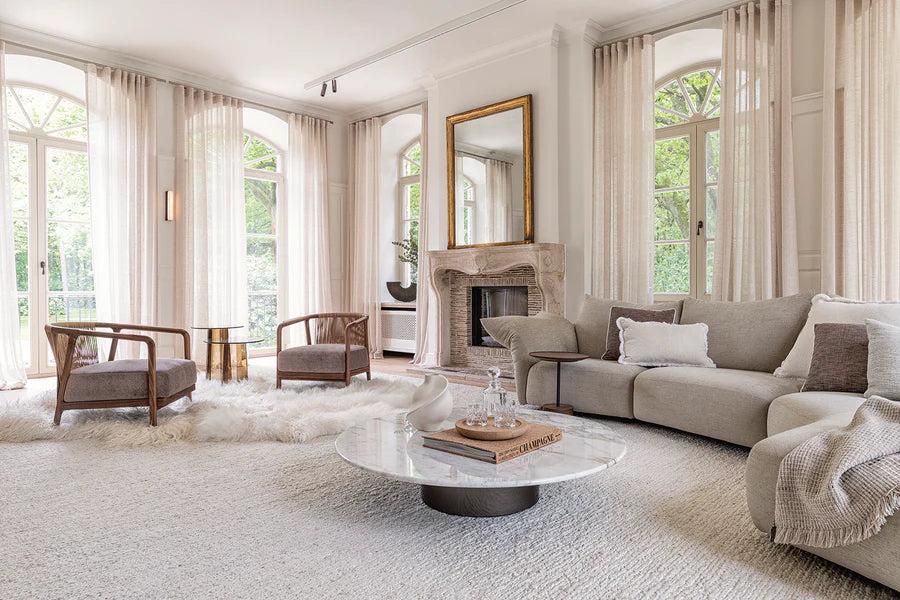
The final stage is a turnkey installation that may take anywhere from one to five days, depending on the size of your project. The team installs products, furniture, art, and accessories, and manages the crews and material suppliers on site.
Read that window carefully. One to five days covers the final installation, not the whole project and not construction. Everything has to be ordered, delivered, and inspected. On renovation projects, the trades also have to finish their work before install days can be scheduled.
What Makes One Project Take Longer Than Another
VRA’s service pages point to the same three variables again and again: the scope and complexity of the work, the availability of materials, and contractor scheduling. Here’s how those play out in practice.
| Factor | What it changes | Mostly depends on |
|---|---|---|
| Project scope | Every added room brings more selections, approvals, orders, and deliveries to coordinate | Your scope decisions |
| Renovation or construction | Design has to be documented and coordinated before trades build, and furniture waits for a finished space | Contractor and trade schedules |
| Decisions and approvals | Ordering doesn’t start until the design and selections are approved | You and your designer |
| Product availability | Some pieces ship quickly; others are backordered or unavailable and have to be re-specified | Vendors and manufacturers |
| Custom work | Custom millwork and made-to-order furniture are built after the order is placed, not pulled from stock | Fabricators and workrooms |
| Late changes | A change after quoting can affect pricing, orders already placed, and trade sequencing | When the change comes up |
| Site readiness | Installation can’t be scheduled until the space is finished, clean, and clear | Site conditions |
Interior Design Timeline vs. Renovation Timeline
A common mix-up is treating the design timeline and the construction timeline as the same thing. Design work can run ahead of and alongside a build, but once contractors are involved the project picks up dependencies that a design-only project doesn’t have.
| Design-only project | Project with renovation or construction | |
|---|---|---|
| What has to happen first | Selections approved, then items ordered | Construction documents, contractor bid review, and a build schedule before anything is installed |
| Who else is on the schedule | Vendors and delivery crews | Vendors, plus contractors and trades working on site |
| Where the waiting happens | Mostly procurement and delivery | Procurement plus build-out, which has to finish before furniture goes in |
| What the designer coordinates | Selections, orders, delivery, and installation | The same, plus construction documents, vendor management, and trade coordination |
VRA works on both sides of that line. Its services include construction documents, contractor bid review, vendor management, custom millwork, and trade coordination, and the team works with trusted contractors and builders — or with yours, if you already have one. For projects that combine the two, full-service interior design in Atlanta covers the design and the coordination together.
One thing to expect: a project that includes construction won’t have a firm completion date until the contractor’s schedule is set.
What You Can Do to Keep the Project Moving
Much of the schedule depends on vendors and trades. These are the parts you can help keep moving.
- Come to the consultation with your scope in mind. Which rooms, what stays, and what has to change.
- Bring inspiration. Photos, a Pinterest board, saved images — anything that shows your designer what you’re drawn to.
- Talk about budget openly at the first meeting. Selections are sourced against it, and resetting the budget later means re-sourcing.
- Say the deadline out loud. A move-in date, a new baby, holiday hosting — a designer can plan around a real date, but only if they know about it.
- Decide who signs off. Approvals stall when two people have to agree and only one of them sat through the presentation.
- Turn approvals around promptly. Ordering doesn’t begin until the design and selections are approved.
- Raise changes early. Once quotes are in and orders are placed, a change can ripple through pricing, deliveries, and trade scheduling.
It’s also fair to ask how your designer builds the schedule. Industry scheduling guidance from Houzz Pro recommends breaking a project into milestones, estimating each phase realistically, and leaving room for contingencies — so it’s reasonable at the start to ask which milestones your project has and where the buffer sits.
When Will You Get a Reliable Project Schedule?
Not on the first phone call. A dependable schedule comes together once your designer has seen the space, understands the scope, and knows what the project depends on — construction, custom items, contractor availability. VRA discusses budget and timeline at the discovery meeting and lays out the project schedule once the design plan is approved.
Until then, treat any number as a range. Timelines are estimates, and they move with scope, approvals, product availability, contractor schedules, and site conditions. If you have a fixed date to work toward, it’s worth raising before design begins — building a schedule around a deadline is easier than compressing one later. You can discuss your project with the design team to get that conversation started.
Frequently Asked Questions
Can an interior design project be finished in a few weeks?
It can. VRA says smaller projects may take a few weeks. A single room furnished mostly with available pieces and no construction moves fastest, because the schedule then depends mainly on how quickly selections are approved and how soon items arrive.
How long does a full-home interior design project take?
VRA says full-home designs or renovations can take several months. More rooms mean more selections, more approvals, more orders, and more deliveries to coordinate. When construction is part of the project, the contractor’s schedule shapes the finish date as much as the design work does.
How long does furniture procurement take?
VRA says furniture procurement may take several weeks. The actual wait depends on what is specified: stocked pieces ship on the vendor’s schedule, while custom and made-to-order items are produced after the order is placed. Every item is inspected at the receiving warehouse before it is installed.
How long does installation take?
VRA’s final results stage may take one to five days, depending on the size of the project. That window covers installing and styling furniture, art, and accessories. It doesn’t include the design, ordering, or construction that has to happen first.
Can E-Design be done on my own timeline?
Yes. VRA’s E-Design process is virtual: you receive a design plan with layouts, material selections, and a shopping list, then implement it at your own pace. Because you handle the purchasing and installation, you set the pace rather than following a managed project schedule.
Planning an Interior Design Project in Atlanta?
VRA Interiors provides full-service interior design in Atlanta and the surrounding communities. That includes the parts of the schedule most homeowners would rather not manage themselves: sourcing and specification, procurement and warehousing, vendor and contractor coordination, and the final installation.
A working timeline starts with a conversation about scope, priorities, and what your project depends on. Discuss your project with VRA Interiors to schedule a consultation.
Sources
- Council for Interior Design Qualification (CIDQ), “What Is Interior Design?” — cidq.org. Accessed August 18, 2026.
- Houzz Pro, “Interior Design Project Schedule Template + Guide” — pro.houzz.com. Accessed August 18, 2026.